Journey

An operating history shaped across unstable systems, construction, cross-border business, regulated products, loss, and reinvention.

Built Across Different Operating Worlds

My work has moved through environments that rarely fit neatly together: post-Soviet private business, formal institutions, construction sites, cross-border project management, physical goods, regulated products, AI systems, and venture formation. The industries changed, but the same operating questions kept returning.

Who controls the critical resource? Where does trust break? Which proof actually matters? What part of the system is ceremonial, and what part determines whether work gets done? I learned to look for the hidden operating layer beneath the visible business.

This Journey is not a complete CV. It is the line of formation behind the way I build now: study the real system, document the proof, identify the bottleneck, build a narrow working version, and make the work transferable.
Formed in Unstable Freedom

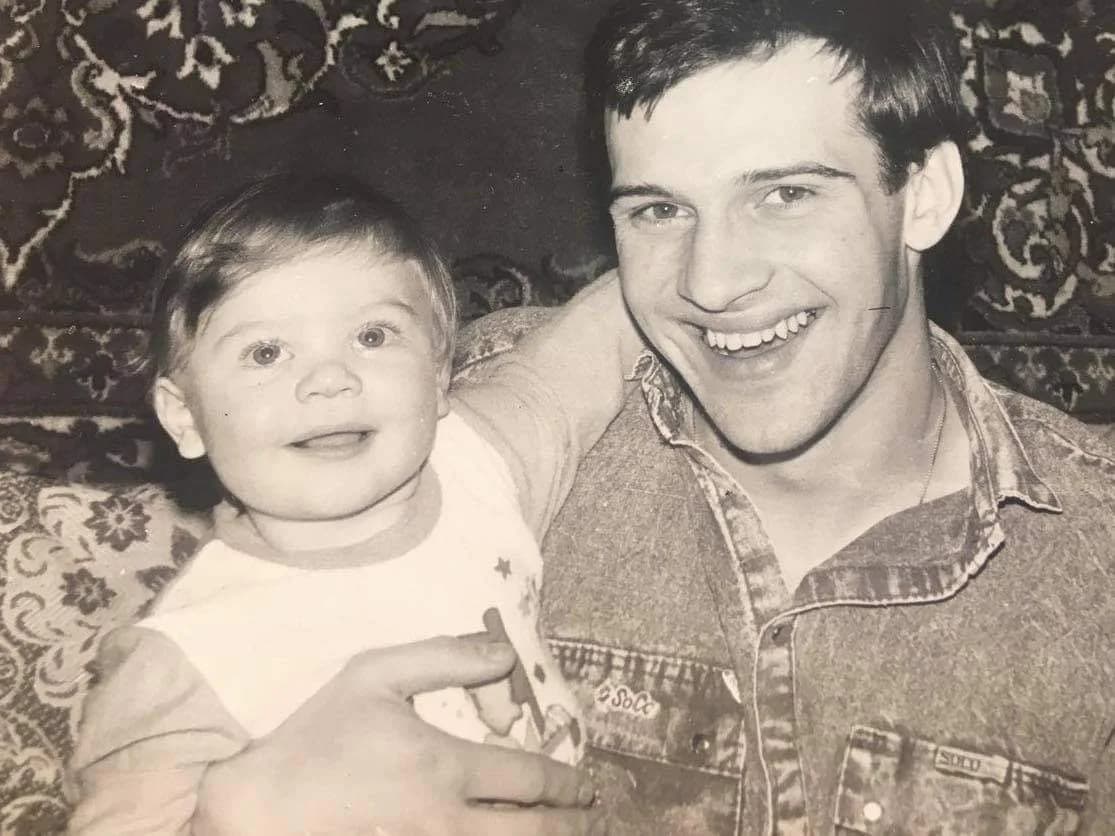
I was born on 1 July 1991 in Nizhny Novgorod, during the final months of the Soviet Union. I grew up in a world where material life inside the family could feel stable while the surrounding institutions, rules, and incentives were changing quickly.

My father was young when I was born. He moved from military construction into private construction during a period when the old system had not disappeared and the new one had not yet become reliable. That transition mattered to me. It showed that work was not only a career path; it was a way of carrying responsibility through unstable conditions.

The atmosphere outside the home was full of informal authority, sudden opportunity, weak trust, and practical improvisation. That mix shaped my instincts early. I became interested in how people get things done when formal rules exist, but do not fully protect the people operating inside them.

Eugene Prudchenko as a child with his father in Nizhny Novgorod in the early 1990s.
With my father in Nizhny Novgorod during the early 1990s.

Learning Through Risk

Before anything looked like a serious company, there were small business experiments, physical assets, payment collection, unreliable counterparties, and the basic education of risk. Some lessons came through planned effort. Others came through losing money, being too early, trusting the wrong structure, or discovering that momentum is not the same as durability.

At university, an HSE dispute taught me a method that stayed with me: evidence, documentation, escalation, and continued action. I learned that a weak position becomes stronger when the facts are organized, the process is understood, and the response is disciplined instead of emotional.

New York in 2010 added another contrast. It was a short but important exposure to a different operating rhythm: density, ambition, market speed, and the sense that scale is partly cultural before it becomes financial. It did not give me a finished model, but it widened the frame.

Building Under Pressure

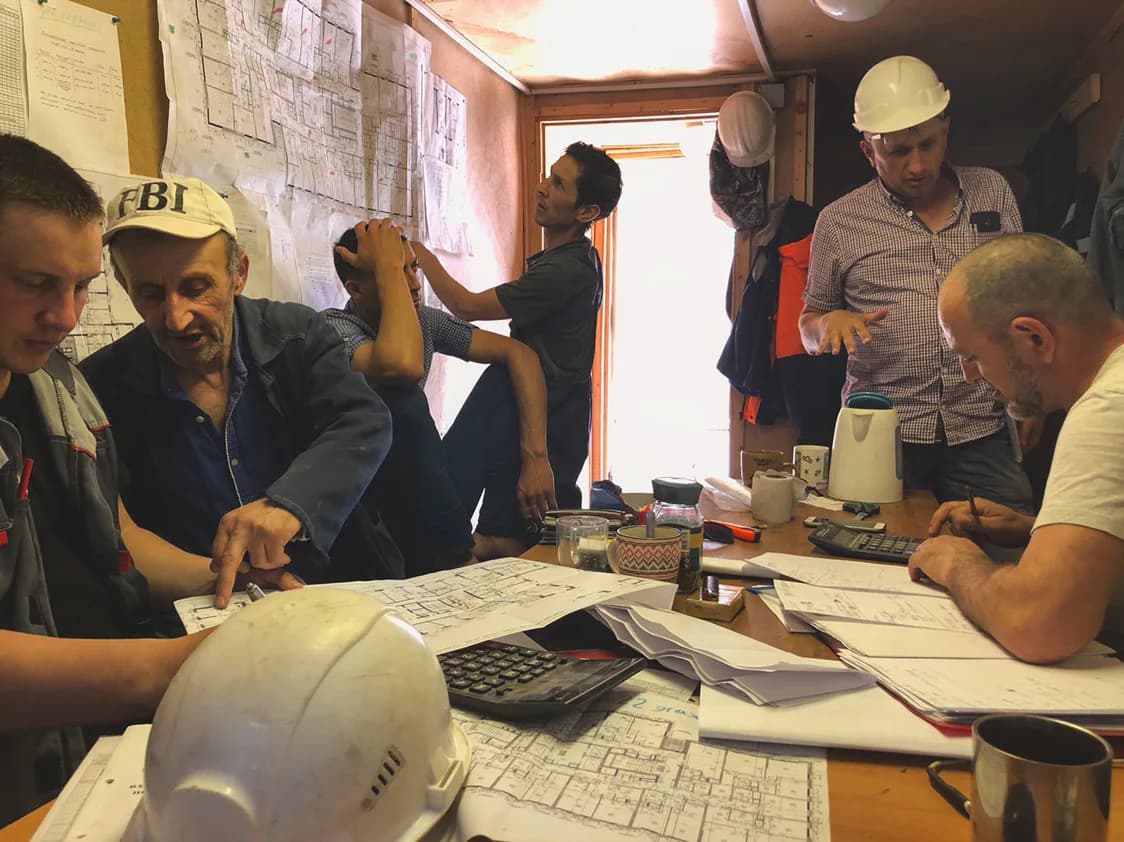
After graduation I moved through construction-sector work and physical project environments where strategy had to survive people, materials, machinery, sequence, weather, cost, and time. Construction is a direct teacher because excuses do not pour concrete, recover equipment, or keep a schedule alive.

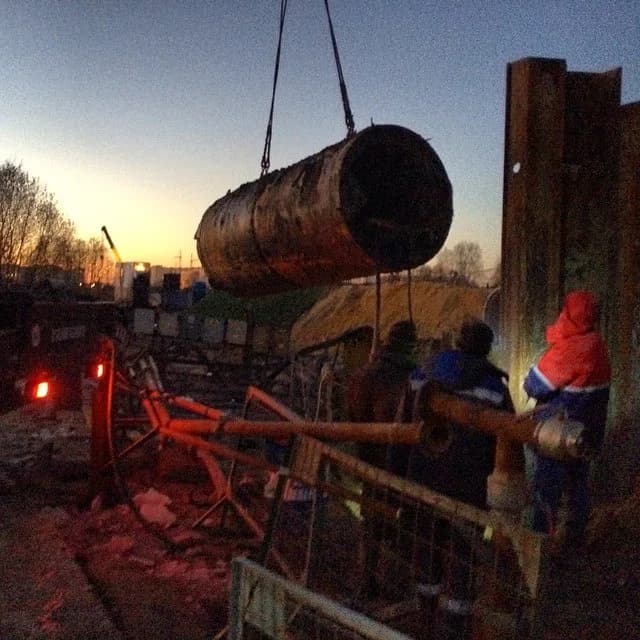
One tunnelling recovery became a defining operating lesson. Equipment was trapped underground as winter approached, and the work had to be reorganized into a crisis operation. It required people, technical judgment, sequencing, two-shift execution, and pressure management rather than abstract planning.

That period also connected to larger construction work, including the Sputnik project with approximately 300 workers. Scale changed the nature of management. Problems became less about individual effort and more about coordination, information flow, responsibility, and the ability to keep many moving parts aligned.

Eugene Prudchenko and a construction team reviewing technical plans in a site office in Russia.
Construction taught me that strategy must survive people, materials, sequence, cost, and time.
A tunnelling complex being lifted from an underground construction site after a recovery operation in Russia.
The trapped equipment was recovered before winter after a two-shift crisis operation.

Growth, Leverage, and Loss

Several ventures grew quickly and then revealed the difference between revenue movement and durable structure. The vape business, HDD trading, physical equipment exposure, and related operating lines gave me speed, pressure, cash-flow lessons, and a clearer view of how fragile a business can be when leverage outruns control.

There were losses, equipment pressure, debt restructuring, and periods where the work became less about expansion and more about survival. I do not treat that as a dramatic identity story. It was a practical education in the cost of weak systems and the danger of confusing visible activity with real resilience.

The lesson was not to avoid risk. The lesson was to respect sequence, proof, margin, counterparties, and control of critical resources. A business that cannot survive bad timing, delayed payments, or operational friction is not yet a system.

Thailand Becomes Home

Thailand entered my life before I relocated permanently. There were repeated journeys, cultural connections, language and educational initiatives, and early exposure to the way Thai institutions, business relationships, and cross-border opportunities worked in practice.

Koh Damlong and other cross-border project-management work added another layer: coordinating people, documents, site realities, and expectations across borders where context could not be assumed.

I moved permanently on 26 July 2018. The relocation was not only geographical. It changed the center of gravity of my work toward Thailand and APAC: documentation, supplier relationships, regulated categories, partner coordination, and the trust problems that appear when foreign operators misunderstand the local operating layer.

The work grew from approximately three client companies to nearly 200. That growth was not a straight line of prestige. It was a practical expansion through accounting, documentation, operations, and repeated coordination problems that had to become more structured as volume increased.

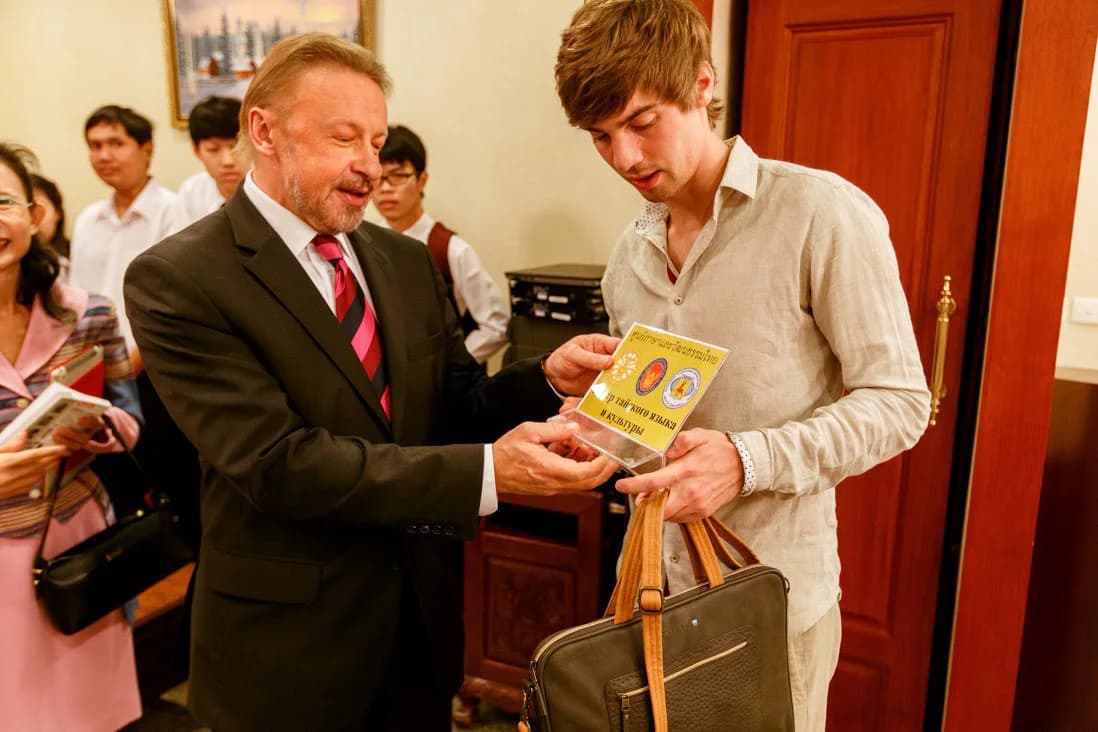
Eugene Prudchenko at an official event connected to a Thai language and cultural exchange initiative in Russia.
Years before relocating, Thailand had already become part of my professional and cultural life.

Building Burakorn

Burakorn began with my wife's support as a family-backed product effort and became a deeper operating education. Burakorn Freeze-Dried Tea was not only a product idea. It forced work across manufacturing, documentation, product positioning, regulatory registration, packaging, export readiness, and category creation.

Regulated product development changed the standard of proof. It was no longer enough to believe in a category or to have a supplier. The work had to connect product facts, process, documentation, allowable claims, production constraints, and commercial narrative without overstating what the documents actually proved.

That discipline now shapes how I think about premium product businesses. The product is only one layer. The durable business is the system around it: sourcing, compliance boundaries, brand trust, distribution, repeatable operations, and the ability to explain the category without making claims the evidence cannot carry.

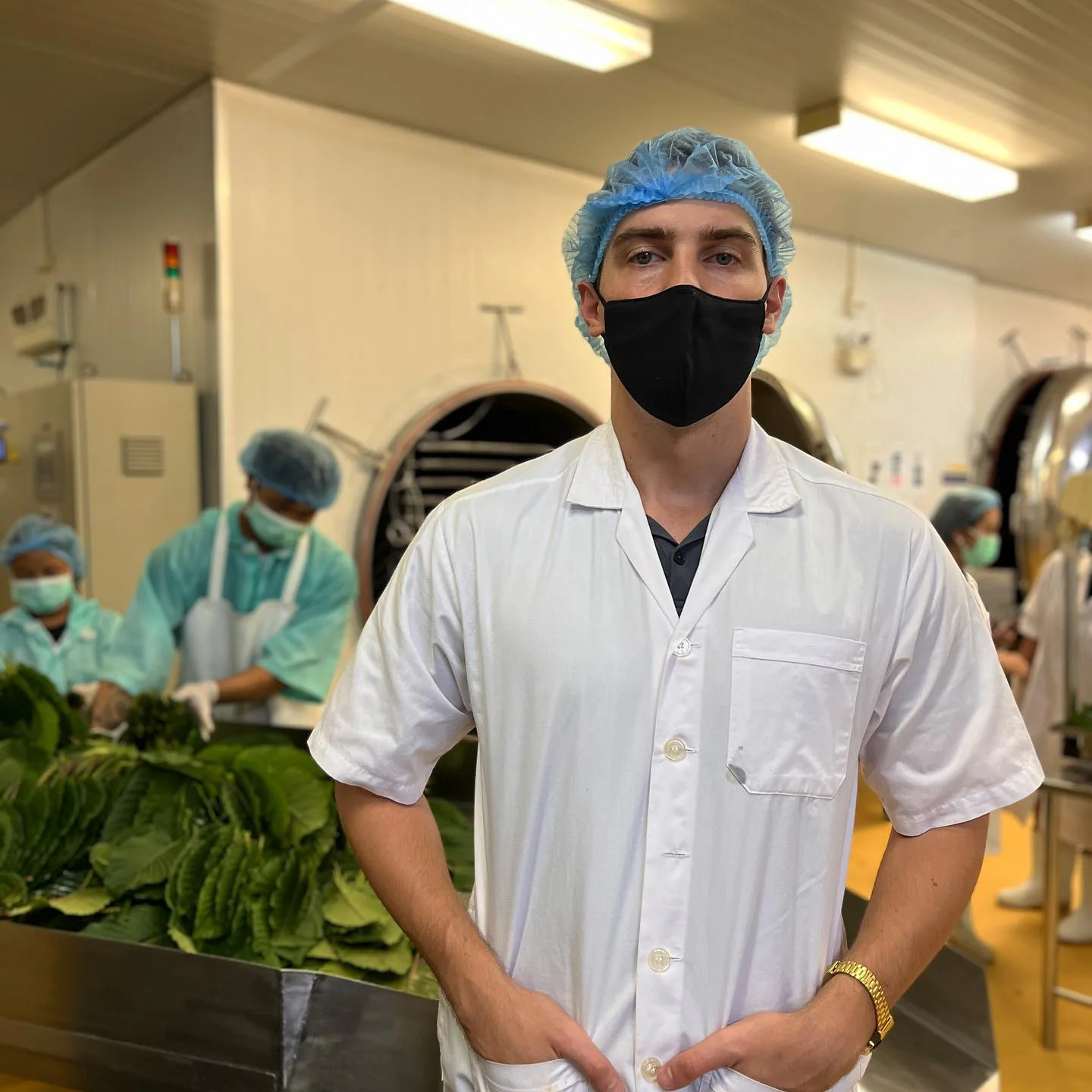
Eugene Prudchenko at a Thai production facility during the development of Burakorn Freeze-Dried Tea.
What began as a product became an infrastructure challenge involving manufacturing, regulation, documentation, and export readiness.

The Current Chapter

A general crisis changed my responsibility and forced a clearer operating posture. The answer was not to chase a new identity, but to build a system that could reduce dependency on memory, scattered judgment, repeated explanation, and fragile manual control.

From March 2023, AI became part of the operating system rather than a side interest. I began treating it as leverage for documentation, analysis, workflow design, decision support, and venture formation. The point was not AI hype. The point was to increase operating capacity where complexity would otherwise slow everything down.

After August 2024, the work moved further into independent venture development: AI-native businesses, traditional businesses strengthened through AI, premium products, distribution systems, and infrastructure for fragmented or underbuilt markets. Bangkok is now my operating base for that work.

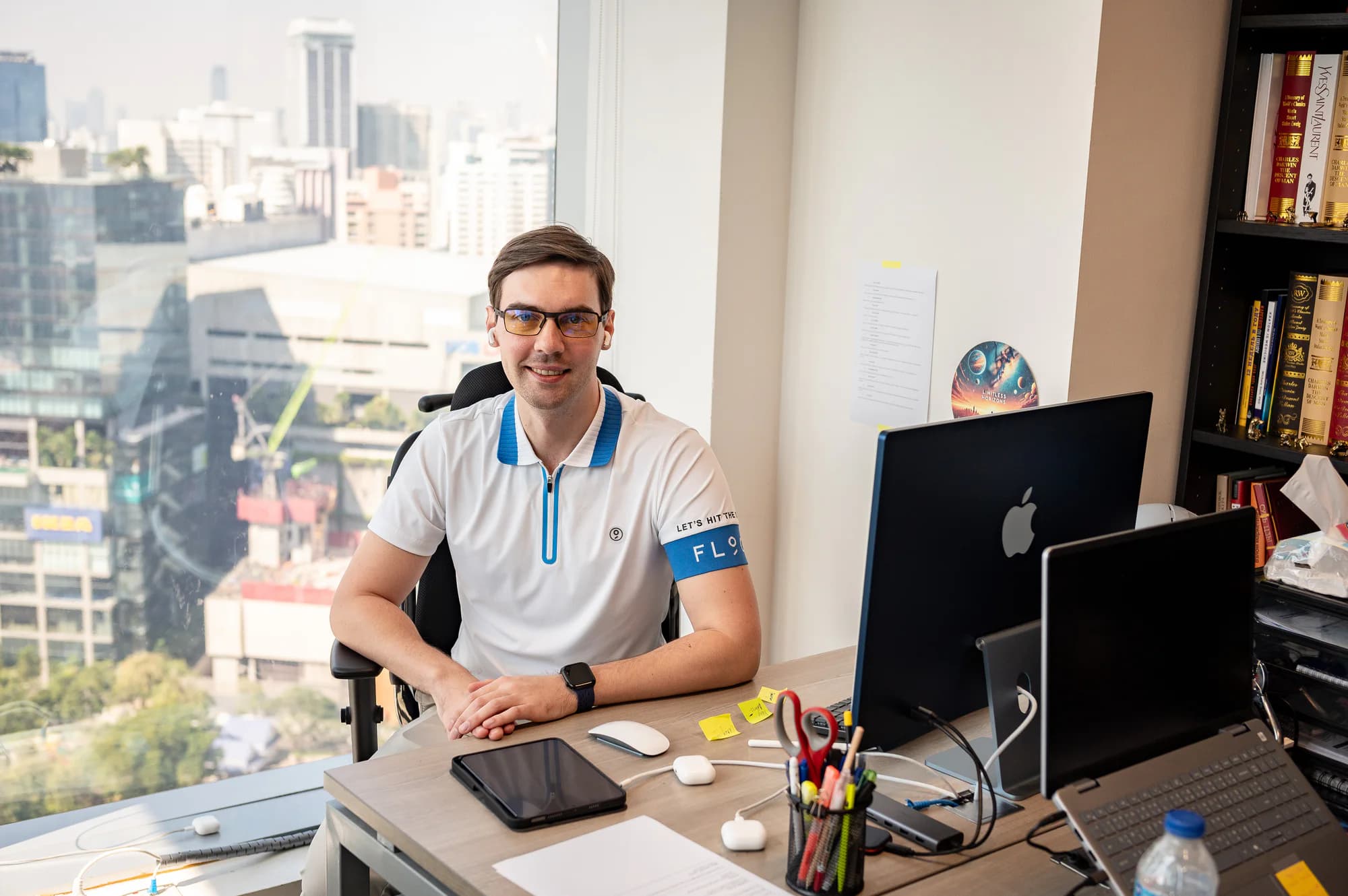
Eugene Prudchenko working from his Bangkok office.
Bangkok is my home and operating base for current venture development.

Closing

The through-line is not a personality myth. It is an operating pattern formed through unstable systems, physical execution, loss, regulation, relocation, and rebuilding. I trust proof more than performance, narrow working systems more than broad declarations, and responsibility more than speed.

The next chapter is built around that pattern: create ventures where AI is useful because the operating problem is real, build trust where markets are fragmented, and turn difficult execution into systems that other serious people can use.

Faith is the governing moral boundary of this work.

Read the Declaration